

Summary
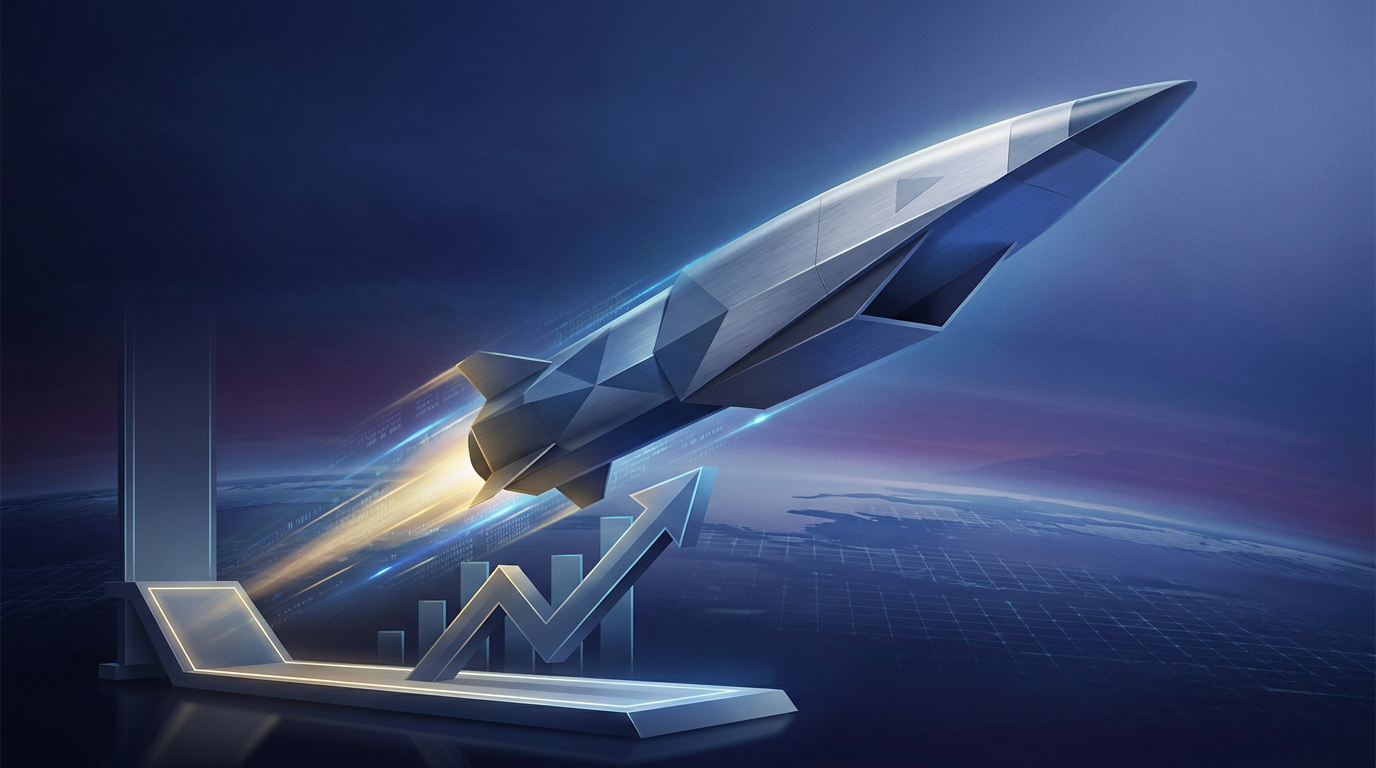
Castelion, a hypersonic missile manufacturer founded by former SpaceX executives, has closed a $1 billion Series C funding round at a $13 billion valuation, aiming to mass-produce hypersonic weapon systems at lower cost and faster speed.
Major Capital Infusion for Defense Tech
Defense technology startup Castelion has announced the closing of a $1 billion Series C funding round, achieving a post-money valuation of $13 billion. The round was co-led by prominent venture capital firm Andreessen Horowitz, private equity giant Carlyle, and financial powerhouse JPMorgan Chase, with continued participation from existing investors Lightspeed Venture Partners, General Catalyst, and Altimeter Capital.
The financing package includes $800 million in equity investment and a $250 million revolving credit facility, demonstrating strong capital market confidence in novel defense manufacturing models. For a startup founded just four years ago, Castelion's valuation trajectory is exceptionally rare in the defense technology sector, reflecting investor conviction in both its technical approach and business model.
This funding round positions Castelion among the most highly valued private defense technology companies and provides substantial resources to scale production of advanced weapon systems. The participation of both traditional venture capital and institutional financial players signals broadening interest in defense innovation beyond the sector's traditional boundaries.
SpaceX Methodology Applied to Defense Manufacturing
Castelion was founded in 2022 by multiple former SpaceX executives who sought to apply the rapid iteration and scaled production methodologies proven successful in the aerospace sector to military weapon systems manufacturing. Traditional defense contractors typically employ highly customized, low-volume production approaches that result in expensive weapon systems with lengthy delivery timelines. Castelion aims to dramatically reduce production costs and shorten delivery schedules through standardized design, automated production lines, and supply chain optimization.
Headquartered in Torrance, California, with production facilities in New Mexico, the company will direct proceeds from this funding round primarily toward scaling production of its Blackbeard hypersonic missile system and other weapon platforms. The Blackbeard system, named after the notorious English pirate, symbolizes the weapon's offensive capabilities and deterrent value.
The company's approach represents a fundamental shift in defense manufacturing philosophy. Rather than treating each weapon system as a bespoke engineering project, Castelion seeks to establish production processes more akin to commercial manufacturing, with emphasis on repeatability, quality control, and economies of scale. This methodology, if successful, could significantly alter the economics of defense procurement.
Addressing the Hypersonic Arms Race
The timing of this funding round carries significant strategic implications. The U.S. Department of Defense has consistently expressed urgent requirements for hypersonic weapons in recent years. Hypersonic weapons travel at speeds exceeding Mach 5 (approximately 3,836 miles per hour), and their combination of high velocity and maneuverability makes them extremely difficult for existing air defense systems to intercept. These capabilities have positioned hypersonic weapons as potentially transformative technologies in strategic military balance.
However, the United States has fallen behind China in hypersonic weapons development. China has conducted numerous hypersonic weapon tests and reportedly deployed operational systems. U.S. defense officials have identified closing this capability gap as a priority, recognizing that doing so requires not only increased research and development investment but also the industrial capacity to rapidly produce these weapons at scale.
Castelion's business model directly addresses this requirement. By reducing unit costs and accelerating production timelines, the company aims to help the U.S. military rapidly build a hypersonic weapons stockpile of sufficient scale. Since its founding, Castelion has secured over $500 million in U.S. military contracts, demonstrating that its technical solutions have gained substantive acceptance from defense authorities.
The strategic imperative driving demand for hypersonic weapons extends beyond raw capability gaps. These weapons represent a category where technological advantage could provide significant deterrent value and operational flexibility. The ability to hold distant targets at risk with minimal warning time fundamentally alters strategic calculations and crisis dynamics.
Defense Technology Investment Trends
From a broader perspective, Castelion's successful fundraising reflects significant changes in the defense technology investment environment. Traditionally, the defense industry has been dominated by a small number of large prime contractors, with startups finding it difficult to secure both capital support and government contracts. However, recent years have witnessed the rise of defense technology startups, driven by intensifying geopolitical tensions, accelerating technological innovation, and evolving government procurement policies.
Venture capital interest in defense technology has markedly increased. The participation of top-tier venture firms like Andreessen Horowitz indicates that this sector has moved from the periphery into mainstream investment consideration. The involvement of private equity firm Carlyle and financial institution JPMorgan Chase further demonstrates that traditional financial capital is beginning to recognize the long-term value proposition in defense technology.
This shift reflects several converging factors. First, the perception of defense technology has evolved from a niche, policy-constrained sector to one offering substantial growth potential amid global security concerns. Second, the success of companies like SpaceX and Palantir has demonstrated that innovative approaches can succeed even in heavily regulated, government-dependent markets. Third, defense budgets in the United States and allied nations have increased, creating expanded market opportunities.
However, defense technology investment also faces unique challenges. These companies typically depend heavily on government contracts, creating concentrated revenue sources. Their technologies and products are subject to strict export controls and security reviews. Commercialization cycles are often lengthy, requiring patient capital. Investors need deep understanding of defense policy, geopolitical trends, and technology development trajectories to navigate this landscape successfully.
Industry Impact and Future Outlook
Castelion's rapid growth trajectory could have far-reaching implications for the entire defense industrial base. If its manufacturing model proves successful, it may compel traditional defense contractors to adapt their production approaches or catalyze additional startup entry into the sector. The U.S. Department of Defense may further adjust procurement policies to create additional opportunities for non-traditional suppliers.
From a technological perspective, the proliferation of hypersonic weapons will have complex implications for global strategic stability. The high speed and difficulty of intercepting these weapons may compress decision-making timeframes and increase risks of miscalculation and conflict escalation. International discussions on arms control for hypersonic weapons remain in early stages, with technological development far outpacing policy formulation.
The broader defense innovation ecosystem is also evolving. Venture capital firms are establishing dedicated defense technology investment teams. Accelerators and incubators focused on defense applications are proliferating. Universities are strengthening partnerships with defense agencies. This infrastructure development suggests that the current wave of defense technology innovation may prove more sustainable than previous cycles.
For Castelion specifically, the $13 billion valuation represents both validation and pressure. The company must demonstrate its ability to scale production as planned, maintain technological advantages, and continue securing government contracts. With substantial capital resources now available, efficiently allocating resources and managing organizational challenges accompanying rapid growth will be critical tests for the management team.
The success of defense technology startups like Castelion also raises questions about the future structure of the defense industrial base. Will traditional prime contractors adapt and maintain dominance, or will a more diverse ecosystem of specialized suppliers emerge? How will government procurement processes evolve to balance innovation with reliability and security requirements? These questions will shape the defense sector for years to come.
The innovation wave in defense technology continues to build momentum, with Castelion's funding success providing another powerful data point. In an environment of intensifying technological competition, the ability to rapidly produce advanced weapon systems at lower cost is becoming an essential component of national security strategy. Whether this approach ultimately delivers on its promise remains to be seen, but the substantial capital commitment reflects widespread belief that transformative change in defense manufacturing is both possible and necessary.
Source: link