

Summary
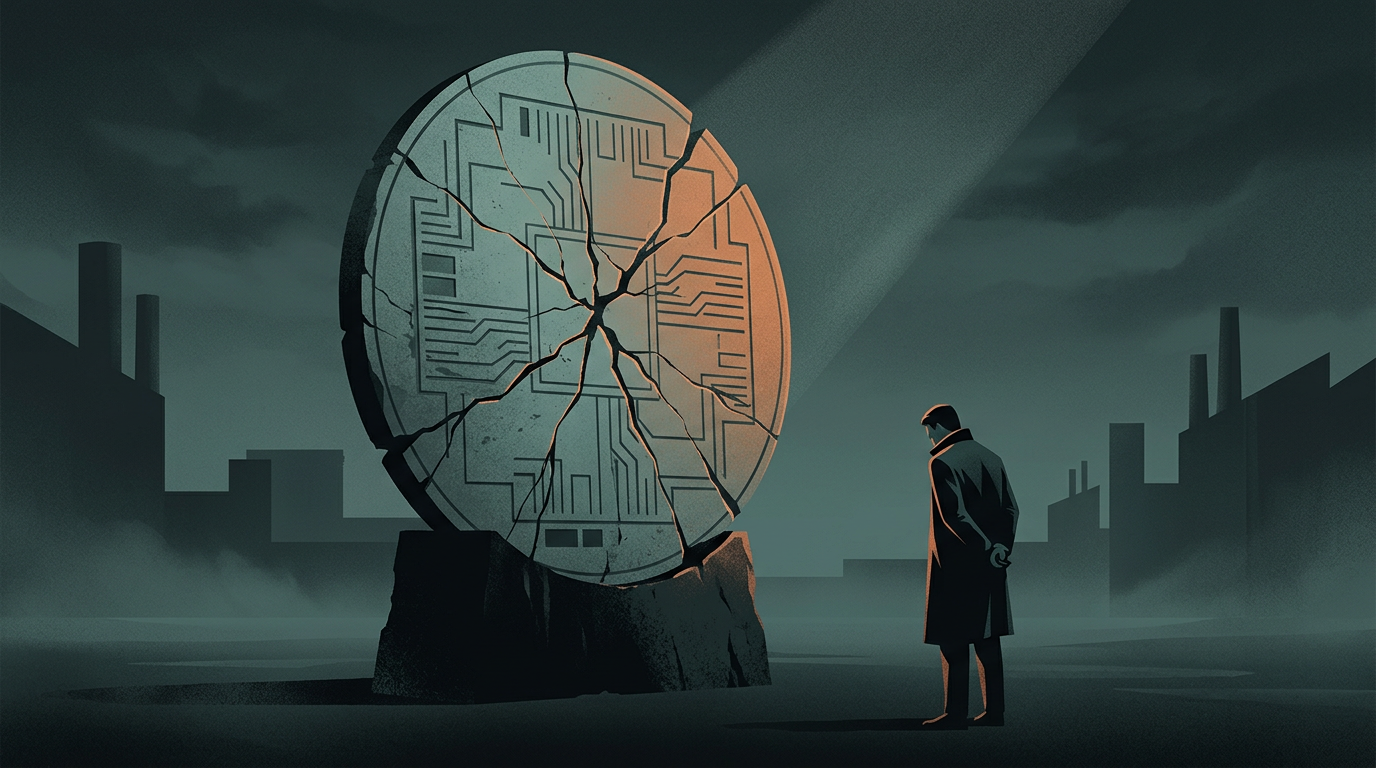
Despite a 40% quarterly sales surge at Nvidia supplier Hon Hai driven by AI server demand, semiconductor stocks face pressure as investors question the sustainability of rapid AI infrastructure investment by tech giants.
The Paradox of AI Infrastructure Investment
The semiconductor industry finds itself at a contradictory juncture. On one hand, core players in the AI infrastructure supply chain are reporting record-breaking growth. On the other, investor confidence in the broader sector is wavering. This divergence reflects deeper market concerns about the sustainability of the AI investment boom.
Hon Hai Precision Industry, the Taiwanese contract manufacturer known globally as Foxconn, has delivered the most direct evidence of AI infrastructure demand in its latest financial disclosure. The company's second-quarter sales surged 40% year-over-year, significantly exceeding market expectations, primarily driven by AI server orders. June revenue alone reached NT$1.33 trillion (approximately $45 billion), up 21.6% from the previous year. The company indicated that AI rack shipments would maintain strong momentum through the current quarter.
As the primary assembler of server racks housing Nvidia's AI accelerators, Hon Hai commands roughly 40% of the global AI rack assembly market. Chairman Young Liu previously projected that AI server shipments could double in 2026. This forecast rests on the foundation of continued aggressive AI capital expenditure by tech giants—regardless of whether AI software applications ultimately generate corresponding returns, infrastructure orders flow directly into Hon Hai's order book.
Growing Investor Caution
However, robust supply chain performance has not translated into broader optimism across the semiconductor sector. Investors are beginning to question a fundamental issue: can tech giants sustain their rapid pace of AI infrastructure investment? Will these investments ultimately deliver commensurate business returns?
These concerns are not unfounded. Over the past two years, tech giants have demonstrated explosive growth in AI infrastructure capital expenditure, yet commercially viable AI application scenarios generating substantial revenue remain limited. The market worries that current investment enthusiasm may be running ahead of actual demand, and once technology companies begin reassessing return on investment, orders could contract rapidly.
From a financial perspective, the return timeline for AI infrastructure investments remains unclear. While large language models and generative AI demonstrate enormous potential, converting these technologies into sustainable business models requires time. Investors fear that if AI application commercialization progresses more slowly than anticipated, infrastructure investment could face overcapacity.
Supply Chain Pressures and Strategic Adjustments
Upstream in the supply chain, pressure signals are equally evident. Nvidia has secured multi-year HBM4 (High Bandwidth Memory) supply agreements with SK Hynix, a critical component for AI accelerators. Memory supply constraints have not only driven up costs but also rippled into consumer electronics, with some consumer-grade products facing supply shortages.
Facing market uncertainty, supply chain companies are pursuing diversification strategies. In June, Hon Hai announced a partnership with Intel and SambaNova to build rack-scale AI infrastructure based on Intel Xeon processors. This move indicates that even core Nvidia suppliers are preparing for potential market shifts, avoiding excessive dependence on a single customer or technology pathway.
This supply chain adjustment reflects a broader industry trend: the AI infrastructure market is evolving from single-vendor dominance toward diversified competition. While Nvidia currently dominates the AI accelerator market, competitors including Intel and AMD are accelerating their pursuit, potentially reshaping the future market landscape.
Potential Implications for Digital Assets
Uncertainty in the semiconductor industry may have indirect implications for the digital assets and blockchain sector. AI infrastructure and blockchain infrastructure share technological overlap in certain areas, particularly in high-performance computing and data processing. If AI infrastructure investment slows, it could affect capacity planning and pricing across the entire high-performance computing supply chain.
For institutional-grade digital asset service providers, understanding these macro technology trends is essential. The convergence of AI and blockchain technologies is becoming a key industry development direction, but infrastructure investment sustainability will influence the speed and depth of this convergence. Market participants need to closely monitor semiconductor industry supply-demand dynamics to better plan their own technology investment strategies.
Outlook: Rational Correction or Continued Boom?
The core question facing the semiconductor sector is whether the AI infrastructure investment boom has reached its peak. Based on order data from supply chain companies, demand appears likely to remain robust at least through the second half of 2026. However, cautious investor sentiment suggests the market is demanding more substantial evidence of investment returns.
In coming quarters, key indicators to watch include: adjustments to tech giants' capital expenditure plans, progress in AI application commercialization, and changes in supply chain inventory levels. If AI applications achieve commercial breakthroughs in more scenarios, current infrastructure investments will be validated as rational; conversely, the market may face a correction cycle.
For the broader technology industry, this represents a critical moment. The scale of AI infrastructure investment is unprecedented, and its success or failure will profoundly influence technology development trajectories for the next decade. Whether semiconductor companies, tech giants, or digital asset industry participants, all need to find balance between optimism and caution—neither missing opportunities presented by technological innovation nor overlooking risks of investment overheating.
Understanding the Market Dynamics
The current market dynamic reveals a fundamental tension between operational reality and investor expectations. Hon Hai's results demonstrate that physical demand for AI infrastructure remains strong—the company is building and shipping real hardware to real customers with real capital budgets. This represents tangible economic activity, not speculative positioning.
Yet the broader market's skepticism highlights a critical distinction: infrastructure deployment and profitable application are separate phenomena with potentially divergent timelines. The semiconductor sector has historically experienced cycles where infrastructure buildouts preceded application maturity, sometimes by years. Investors may be pricing in the risk that current AI infrastructure deployment is outpacing the development of revenue-generating applications.
This creates a challenging environment for market participants across the technology ecosystem. Companies must balance the need to invest in emerging technologies against the uncertainty of return timelines. The semiconductor sector's current experience serves as a case study in how markets process rapid technological change—with enthusiasm tempered by demands for demonstrable business value.
For observers of technology markets, including those in digital assets and blockchain, the semiconductor sector's trajectory offers important lessons about infrastructure investment cycles, market sentiment dynamics, and the complex relationship between technological capability and commercial viability. As these industries continue to evolve and potentially converge, understanding these patterns becomes increasingly relevant for strategic planning and risk assessment.
Source: link