

Summary
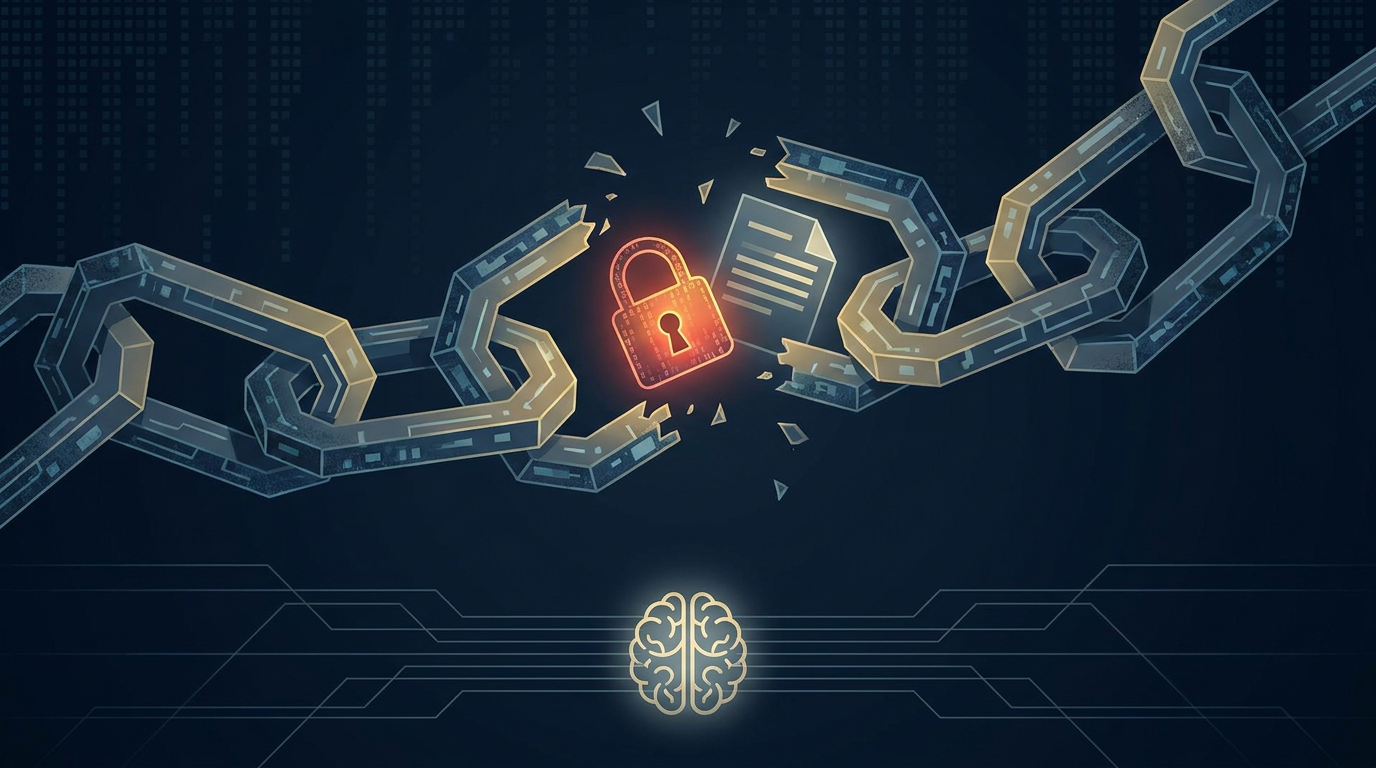
Reports and Binance disclosures indicate that the attack may have begun with a fake recruitment process that compromised an employee device, then moved through internal AI tools and wallet-signing workflows before assets were transferred from hot wallets. The incident broadens the security discussion from private-key protection to people, endpoints, AI agents, suppliers and account permissions.
An attack that reportedly started with a person
The Binance incident is being described not simply as a smart-contract exploit, but as a chain that may have combined social engineering, endpoint compromise, internal-tool abuse and on-chain authorization. Reporting from TechFlow, BlockBeats and security analysts says the attackers posed as recruiters and approached an employee through a hiring or interview process. The employee was allegedly persuaded to open a file, install software or run a tool on a work device.
The basic technique is familiar. What has changed is the value of the systems connected to an employee’s computer. At a crypto exchange or wallet infrastructure provider, an employee laptop may have access to internal documentation, development environments, operational dashboards, authentication sessions or signing workflows. An attacker does not always need to extract a private key. It may be enough to obtain the context needed to make a legitimate employee, service or signing system authorize an illegitimate action.
Earlier attacks involving Ronin Bridge, Harmony, Atomic Wallet and other crypto projects have also been associated in public reporting with fake recruitment, insider impersonation or supply-chain compromise. The individual technical details differ, but the broader pattern is consistent: attackers often target the people and processes surrounding a blockchain system before trying to defeat the blockchain itself.
AI as a new permission amplifier
The AI element has attracted particular attention. According to the cited reports, attackers may have manipulated an internal AI assistant through prompt manipulation, indirect prompt injection or contaminated context. The assistant could allegedly be used to expose sensitive information or help the attackers understand internal systems and wallet-signing procedures. The public material does not independently establish every part of that technical chain, but the possibility is significant for any institution using AI inside privileged environments.
Internal AI assistants are increasingly connected to code repositories, logs, ticketing systems, operating manuals and workplace communications. Their usefulness comes from combining information that was previously distributed across multiple systems. That same capability can expand the amount of sensitive context available through a single interface. If an AI assistant is linked to development tools, cloud services, identity platforms or operational systems, it is no longer merely a chatbot. It becomes an intermediary between multiple permission domains.
A compromised employee device can turn that intermediary into a reconnaissance tool. An attacker might use the assistant to locate procedures, explain unfamiliar code, identify approval paths or summarize information that would otherwise require access to several different systems. The risk is not limited to whether a model directly reveals a secret. It also includes what the model can retrieve, which tools it can call, whether it can execute code and whether its output can be passed into another system without independent validation.
Traditional security programs often focus on accounts, IP addresses, device fingerprints and malware indicators. Prompt-based attacks can begin with language that appears ordinary. For a platform handling digital assets, any AI system that can access signing parameters, address allowlists, transaction construction or approval procedures should be treated as a sensitive component. It should not automatically receive the same trust level as ordinary productivity software.
The risk of a “legitimate” authorization
Public on-chain analysis says the targeted hot wallet signed multiple EIP-7702 delegation authorizations. EIP-7702 allows an externally owned account to delegate control logic to contract code under specified conditions. The feature can support more flexible account behavior and better transaction experiences. It also means that a signer must understand more than a destination address and an asset amount.
When a wallet signs an authorization that allows contract logic to act on its behalf, the review process must cover the contract, the function being called, the scope of the delegation and the assets that could ultimately be moved. If an attacker obtains a valid signature, it may not need to steal the private key or repeatedly compromise the signer. It may instead invoke the authorized logic through subsequent transactions.
Analysts cited in the reporting say the attackers tested parts of the process with other wallets before the main operation. That suggests preparation rather than an improvised transaction. It also illustrates why private-key custody alone is not a complete security model. A key can remain inside an approved signing device while the device, approval screen or transaction parser is manipulated into approving something the operator does not fully understand.
For institutional wallets, the signing system should display a verifiable transaction intent, not merely raw calldata, a contract address and a sequence of hexadecimal parameters. Human reviewers need to see the assets involved, the authority being granted, the beneficiaries and the expected end state. Where a transaction cannot be translated reliably into a human-readable intent, it should receive a higher level of scrutiny or be blocked by policy.
From key protection to full-chain control
The incident points to several control priorities for exchanges, custody providers and institutional wallet operators.
First is endpoint separation. Devices used to access signing workflows should not also be used for routine browsing, job applications, unapproved software or unrestricted AI tools. Administrative privileges, browser sessions, development environments and signing environments should be separated as much as practical. A clean signing device cannot compensate for an operational process that continually exposes it to ordinary internet activity.
Second is least privilege and automatic expiry. Employees, service accounts and third-party tools should receive only the permissions needed for a defined task. Temporary access should expire automatically rather than relying on someone to remember to revoke it. Previous incidents have shown how old test permissions, emergency access and forgotten delegated authority can remain available long after the original business need has ended.
Third is transaction-level verification. Multisignature approval is useful, but it is not automatically safe if multiple signers approve the same malicious request. Approval systems should parse assets, contract methods, delegation relationships and final beneficiaries. They should apply independent controls to unusual amounts, repeated authorizations, rapid batch transfers, newly deployed contract logic and activity that differs from normal operational patterns.
Fourth is AI governance. Organizations should restrict AI access to private keys, seed phrases, credentials, unredacted logs and other highly sensitive material. Model calls and tool use should be auditable. AI agents that can take actions require human confirmation, a policy engine and permission boundaries that the model cannot override through a new prompt. A response that sounds plausible cannot serve as evidence that a funds-related action is safe.
Tracing funds does not remove operational risk
The reporting also says that some issuers froze or restricted assets associated with the attack. Public accounts differ on the amount frozen, the net loss and the amount moved across networks, and those figures may change as investigators reconcile wallets and transactions. On-chain visibility can support tracing and screening, but it does not guarantee recovery or provide an immediate, complete measure of the affected party’s loss.
That distinction matters for institutional custody. Asset freezing is a downstream response. It may limit the usability of some tokens, but it cannot reverse the original failure in identity, authorization or signing controls. Institutions therefore need both preventive controls and a tested incident-response process covering address screening, emergency suspension, communications, evidence preservation and coordination with relevant service providers.
A regulatory and governance issue, not only a technical one
The reported involvement of North Korea-linked hacking groups places the event within a broader context of cross-border cybercrime, sanctions evasion and anti-money-laundering enforcement. The Federal Bureau of Investigation has been cited in reporting as linking the incident to a North Korea-associated group known as TraderTraitor. Attribution remains a matter for official investigations, but the alleged connection underscores why a major crypto theft can become a national-security and compliance issue rather than a private platform incident.
For exchanges and custody businesses, the review will likely extend beyond smart-contract audits. It may include hiring controls, employee security training, vendor due diligence, privileged-access management, AI governance, business continuity and incident reporting. Regulators and institutional clients increasingly want evidence that a platform can control the entire operational path from an employee device to a blockchain signature.
Some details of the Binance incident remain subject to official confirmation, and public estimates of the amount involved are inconsistent. The broader lesson is nevertheless clear. In digital-asset systems, the weakest point may not be the cryptography or the chain. It may be a workflow that an attacker can persuade, manipulate or quietly authorize. Security programs that treat people, AI tools, suppliers, signing devices and on-chain permissions as one connected risk surface will be better positioned to detect that failure before it becomes a large-scale asset movement.
Source: link